
· 7 min read
Brow Lamination vs. Microblading: Which Is Right?
By Anahit Poghosyan, Certified Lash & Brow Artist · 13+ years of experience
Lamination restyles the brow hair you have; microblading tattoos hair you don't. A Montebello brow artist compares cost of upkeep, healing, and results.
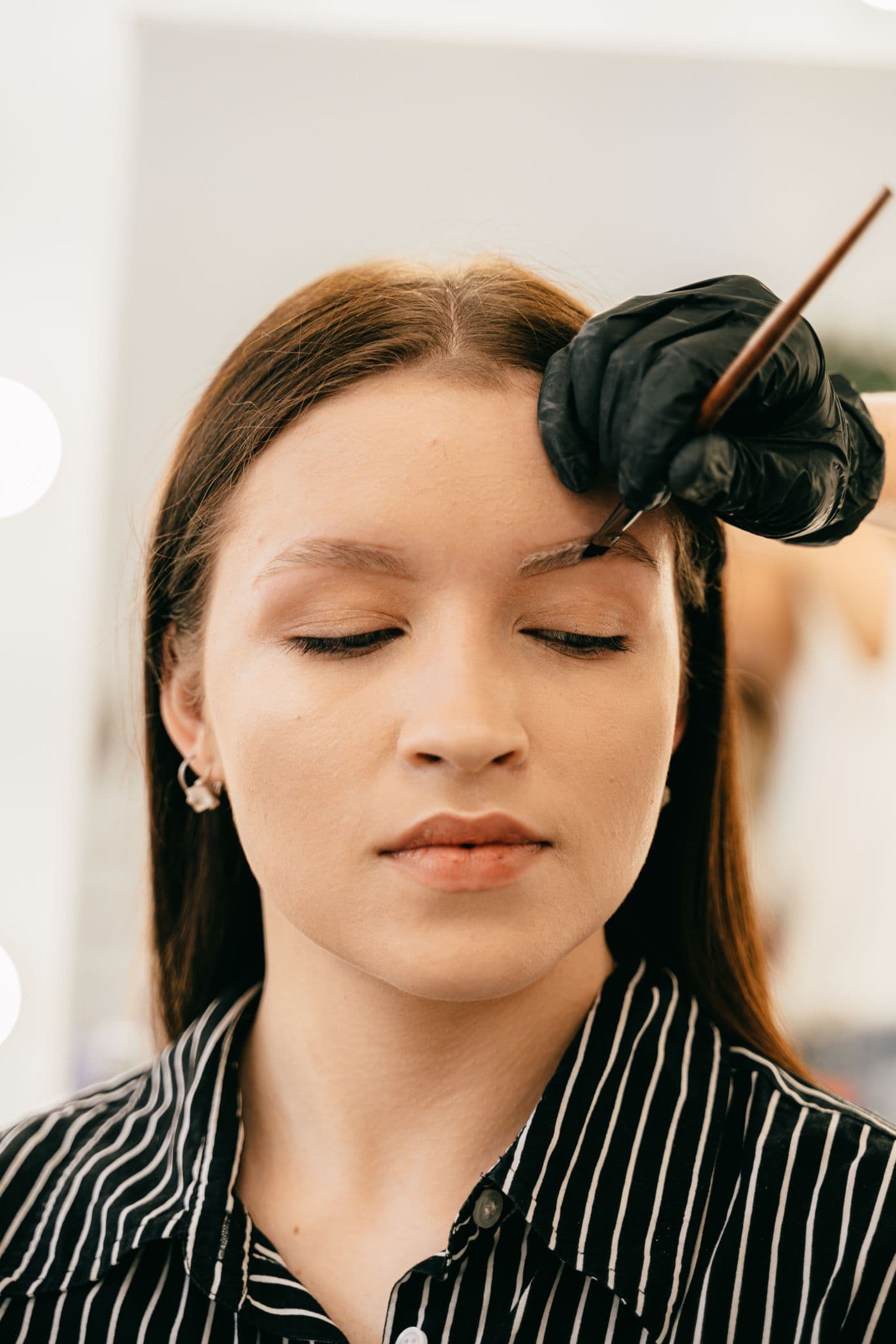
Brow lamination restyles the brow hair you already have and lasts 4–6 weeks. Microblading tattoos fine pigment strokes into the skin to create hair that isn't there, and lasts 1–3 years. Choose lamination if your brows are unruly, flat, or downward-growing; choose a pigment treatment if they have real gaps to fill.
Key takeaways
- Lamination is chemistry applied to hair — no needles, no pigment, no broken skin. Microblading is a cosmetic tattoo placed with a manual blade.
- Lamination lasts 4–6 weeks with no healing downtime. Microblading lasts 1–3 years but needs 7–14 days of careful healing and a touch-up 6–8 weeks later.
- Lamination cannot create hair. If a brow has a bare patch or a missing tail, only pigment fills it.
- Oily skin blurs microblading's fine strokes faster; powder brows, a soft shaded permanent-makeup technique, hold better on oily skin and are what this studio offers instead of microblading.
- The two aren't mutually exclusive: lamination every 4–6 weeks and a pigment treatment every 1–3 years solve different problems, and clients often combine them.
What does brow lamination actually do?
It changes the direction and texture of hair you already grow. A softening solution relaxes the bonds inside each brow hair, the artist brushes the brows into the shape you want — usually swept up and out — and a second solution locks that structure in. The whole appointment runs about 45–60 minutes, results are visible when you walk out, and they last 4–6 weeks before new growth relaxes the effect. Lamination makes sparse-looking brows read as fuller because hair lying flat against the skin covers less area than hair standing up. What it cannot do is add a single hair. Full detail on the appointment is in our brow lamination guide, and the brow lamination service page covers what to expect at the studio.
What does microblading actually do?
It deposits pigment into the upper layer of skin using a hand-held tool with a fine blade, drawn as individual hair-like strokes. Because the strokes are pigment rather than hair, microblading can build a tail that never grew back, close a gap from a scar, or extend a brow that plucking thinned decades ago. It's a two-appointment treatment: the first session places the shape, and a touch-up 6–8 weeks later corrects anything that healed unevenly. Healing takes 7–14 days on the surface, with color settling over 4–6 weeks, and the finished result holds 1–3 years before it fades enough to need a refresh. It is a tattoo, with everything that implies: broken skin, aftercare rules, and a shape you live with for years.
How do powder brows fit in?
Powder brows are the third option, and often the better one. Instead of drawing discrete strokes, the artist shades soft pigment in layered passes for a filled-in look closer to brow powder than to individual hairs. That matters practically: fine microbladed strokes tend to blur and spread on oily skin, while shaded pigment holds its edge. Powder brows also suit anyone who wants their brows to look done rather than to look untouched. This is the permanent-makeup technique offered at the studio — Anahit does powder brows and brow lamination, not microblading. If you're considering it, our powder brows healing timeline walks day by day through what the first six weeks look like, including the week-two ghost phase that alarms people who weren't warned about it.
Brow lamination vs. microblading vs. powder brows: side by side
| Brow lamination | Microblading | Powder brows | |
|---|---|---|---|
| What it changes | Direction and texture of existing hair | Adds hair-stroke pigment in the skin | Adds soft shaded pigment in the skin |
| Breaks the skin? | No — no needles, no pigment | Yes — manual blade | Yes — cosmetic tattoo device |
| Results last | 4–6 weeks | 1–3 years | 1–3 years |
| Healing time | None; result is visible immediately | 7–14 days surface, 4–6 weeks to settle | 7–10 days surface, 4–6 weeks to settle |
| Best for | Unruly, flat, or downward-growing brow hair | Sparse brows with some structure, dry to normal skin | Sparse or over-plucked brows, oily skin, a soft filled-in look |
| Follow-up | Rebook at 4–6 weeks | Touch-up at 6–8 weeks, then refresh as it fades | Touch-up at 6–8 weeks, then refresh as color softens |
| Offered at this studio | Yes | No | Yes |
Which one is right for your brows?
Answer one question first: do you have brow hair where you want brows? If yes, and the problem is that it grows down, sticks out, or lies flat, lamination fixes exactly that and you'll see the result the same day for a fraction of the commitment. If no — if there's a bare patch, a missing tail, or an area that stopped growing years ago — no amount of restyling covers it, and a pigment treatment is the only thing that will. Second question: how oily is your skin around the brow? Oily skin is the standard argument for powder over microblading, because shaded pigment survives sebum better than fine strokes. Third: how much upkeep do you want? Lamination is a standing appointment every 4–6 weeks. Permanent makeup is two appointments now and a refresh in a year or three.
What does the upkeep look like over a year?
Different in kind, not just in frequency. Lamination is a recurring appointment: eight to twelve visits a year at a 4–6 week cadence, no healing, no downtime, and you can stop at any point with no trace left behind. Permanent makeup front-loads everything: two appointments within about two months, roughly two weeks of careful aftercare, then nothing for a year or more — but the shape you approved is the shape you have until it fades. That difference is worth taking seriously if your brows are still recovering from over-plucking; our guide to growing out over-plucked eyebrows makes the case for knowing what your natural brows can do before committing to pigment.
Where to get your brows done in Montebello
Both treatments come down to shape, and shape comes down to mapping. At Anahit's Lash & Eyebrow Studio in Montebello, CA, brow appointments begin by mapping the arch to your bone structure and existing growth pattern before any solution or pigment is applied, and permanent-makeup clients approve the drawn shape before the first pass. The studio offers brow lamination, brow shaping, and powder brows through permanent makeup; if microblading specifically is what you want, Anahit will tell you that directly rather than talking you into something else. It's a one-artist studio inside Sola Salon Studios on W Beverly Blvd, by appointment only, and consultations are part of every booking — useful if you're still deciding between the two. Clients come in from across Montebello, East Los Angeles, and Whittier, many of them for both brow and lash services on the same visit.
Frequently asked questions
Can I get brow lamination if I already have microblading or powder brows?
Usually yes, and it's a common pairing. Lamination works on hair and permanent makeup works on skin, so they don't interfere — the lamination lifts whatever natural hair you have while the pigment fills the gaps behind it. Tell your artist about existing pigment beforehand so they can adjust the placement of solutions, and wait until permanent makeup has fully healed, at least six weeks.
Which one hurts more?
Microblading, without question. Lamination involves no needles and no sensation beyond the solutions sitting on the brow, and most people find it dull rather than uncomfortable. Microblading and powder brows both use topical numbing, and most clients describe the feeling as scratching or pressure rather than sharp pain. Tenderness for a day or two afterward is normal with any pigment treatment.
How long should I wait between brow lamination appointments?
Four to six weeks minimum, matching the point where new growth relaxes the set. Laminating more often than that over-processes the hair and can leave brows dry, brittle, or frizzy. If your brows look unruly before the four-week mark, brushing them into place with a spoolie and a brow gel is the fix, not another lamination.
Is brow lamination or microblading better for very sparse brows?
Microblading or powder brows, because sparse brows are a hair-density problem and lamination can only restyle what's there. Lamination on a genuinely sparse brow makes the sparseness more visible, not less, by lifting hairs off the skin they were covering. If there's still moderate hair and the issue is direction rather than quantity, lamination is worth trying first — it's reversible in six weeks.