
· 7 min read
Do Lash Extensions Damage Your Natural Lashes?
By Anahit Poghosyan, Certified Lash & Brow Artist · 13+ years of experience
Extensions don't damage lashes when applied right. A Montebello lash artist on weight limits, isolation, warning signs, and how long recovery takes.
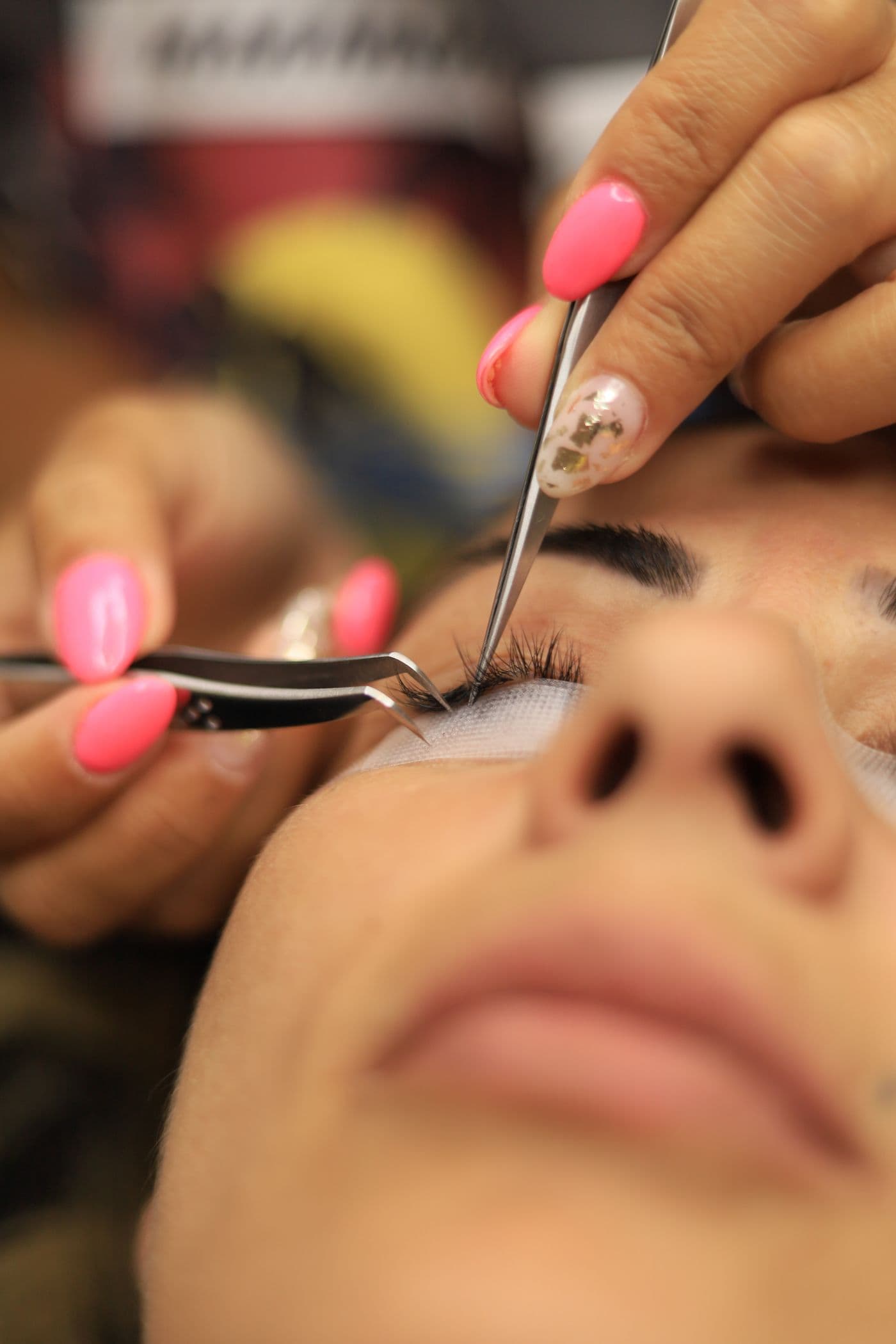
No — correctly applied lash extensions do not damage your natural lashes. Damage comes from application errors: extensions too heavy for the lash carrying them, poor isolation that glues several lashes together, rough removal, and rubbing. Correct weight, one extension per isolated natural lash, and gentle aftercare keep your own lashes intact.
Key takeaways
- Healthy lashes shed on their own schedule — roughly 2 to 5 a day — and each lash replaces itself over about 60 to 90 days. Shedding is normal; shedding faster than lashes regrow is not.
- The two real causes of damage are excess weight and failed isolation, not extensions as a category.
- Volume sets use ultra-fine 0.03–0.07 mm fibers specifically so a fan of several extensions weighs about the same as one thicker classic lash.
- Warning signs are specific: stinging during application, twisted or bent natural lashes, bare patches along the lash line, and extensions that come off with two or three natural lashes stuck together.
- Lashes weakened by bad work typically recover in three to six months once the cause is removed — no product speeds up a growth cycle.
What actually causes lash damage?
Two technical failures, and neither is the extension itself. The first is weight: every extension is carried by a single natural lash, and a lash too fine or too weak for what's glued to it bends, twists, or is pulled out early. Sustained overload at the follicle is what lash artists call traction damage. The second is isolation failure — "stickies." If the artist doesn't separate one natural lash from its neighbors before applying, adhesive bonds two or three lashes together. Because those lashes sit at different stages of their growth cycle, the one ready to shed drags the others out with it, and the client feels pinching or tugging. Everything else people blame — the glue, the extensions, the frequency of fills — is downstream of those two failures.
How much weight can one natural lash safely hold?
A working rule most trained artists follow: an extension should not exceed roughly twice the diameter of the natural lash carrying it, and should not add more than about 2–3 mm of length beyond it. That is why a proper consultation includes looking at your lashes under light before anyone picks a tray. Fine, light lashes take 0.10–0.12 mm classics or fine-fiber fans; strong lashes can carry 0.15 mm and up. Volume work solves the weight problem from the other direction: instead of one thick fiber, the artist builds a fan from several very fine ones so the total load stays at or below a single classic extension.
| Set type | Fiber diameter | How it's applied | Load on each natural lash |
|---|---|---|---|
| Classic | 0.10–0.20 mm | One extension per isolated natural lash | Highest per fiber — must be matched to lash strength |
| Hybrid | Classic fibers mixed with fine fans | Alternating singles and small fans | Moderate; adds texture without much added weight |
| Volume | 0.03–0.07 mm | 2–10 fine fibers fanned onto one lash | Comparable to one classic lash when fanned correctly |
| Mega volume | 0.03 mm and finer | 10–16 fibers per fan | Safe only on healthy, strong natural lashes |
If you want the full breakdown of how each style looks and wears, our guide to classic, hybrid, and volume lash extensions compares all three.
How do you know if your lashes are being damaged?
Look for specific signs, not for general sparseness right after a set is removed — some of that is just the loss of contrast. Real damage looks like this: natural lashes that are visibly bent, kinked, or growing sideways; short broken stubs along the lash line; bald gaps, most often at the outer corners where lashes are naturally finest; extensions shedding in clumps with two or more natural lashes attached; and any stinging, burning, or pulling during or after the appointment. A well-applied set feels like nothing at all. If you can feel your lashes, something is bonded that shouldn't be. Say so at the appointment, not three fills later.
Do you need to take breaks from lash extensions?
Not if the work is sound. Plenty of people wear extensions continuously for years with healthy lashes underneath — several clients at this studio have worn them without a break for five to nine years, coming in every two to three weeks for fills. What matters is that each fill begins by removing grown-out extensions and checking the natural lashes underneath, rather than adding fibers to whatever is still hanging on. If your lashes are already damaged, that's a different situation: take four to six weeks off, or switch to a lash lift, which curls your own lashes without attaching anything to them. A lift adds zero weight, which is why it's often the recovery route.
How long does it take damaged lashes to grow back?
Three to six months in most cases, because you're waiting on a biological cycle rather than a treatment. Each lash grows, rests, and sheds over roughly 60 to 90 days, and the lashes across your lash line are all at different points in that cycle, so recovery looks gradual rather than sudden. During that window: stop extensions, wash the lash line daily with a gentle foaming cleanser to keep follicles clear, skip the mechanical curler on weakened lashes, and don't rub your eyes. A conditioning serum can support the lashes you have, but nothing shortens a growth cycle. The daily habits that protect lashes either way are in our lash extension aftercare guide.
Getting lash extensions in Montebello without damaging your lashes
The safeguard is the artist, not the product. At Anahit's Lash & Eyebrow Studio in Montebello, CA, every set starts with an assessment of your natural lash strength, and length, curl, and weight are chosen from there rather than from a photo on your phone. Clients regularly mention that Anahit will tell them when the set they're asking for is heavier than their lashes can carry, and explain why — exactly the conversation you want before the appointment, not after. Fills run every two to three weeks and include removing outgrown extensions and checking the lash line underneath. Because it's a single-artist studio inside Sola Salon Studios on W Beverly Blvd in Montebello, the person who assessed your lashes at the first appointment is the person working on them at every fill — continuity that clients driving in from Whittier, Pico Rivera, and Monterey Park cite as the reason they've stayed for years. If you're weighing extensions against a lower-commitment option, compare them in our lash lift vs. lash extensions guide, or see what a first appointment involves on the lash extensions service page.
Frequently asked questions
Can I get lash extensions if my natural lashes are thin or sparse?
Usually yes, with adjustments. Fine lashes need shorter lengths, finer diameters, and often a light volume fan instead of a single classic extension, because a fan spreads weight better than one thick fiber. A good artist builds a lighter set and tells you honestly what your lashes can hold. If your lashes are actively damaged, though, the answer is to recover first and book once they've grown back in.
Does removing lash extensions damage your lashes?
Professional removal doesn't. A gel or cream remover dissolves the adhesive in a few minutes and the extensions slide off with no tension on the natural lash. Damage comes from removal at home — pulling, picking, or scrubbing at extensions — which takes natural lashes with it. If a set needs to come off early, book a removal rather than working at it yourself.
Do lash serums help while wearing extensions?
They can support the lashes you have, but apply them along the lash line rather than over the extensions, and avoid oil-based formulas, which break down lash adhesive and shorten retention. Serums don't speed up the growth cycle or reverse damage on their own. Check any prostaglandin-containing serum with your eye doctor first, since some are associated with eyelid darkening and iris pigment changes.
Are cluster lashes or DIY extensions safer for my natural lashes?
No — they're the riskier option. Cluster lashes bond to several natural lashes at once by design, which is precisely the isolation failure that professional application exists to avoid, and the strip adhesives sold in DIY kits are not formulated for the lash line. Much of the traction damage lash artists see in the correction chair comes from clusters worn for weeks, not from professionally applied extensions.